
There is nothing quite like lighting a luxury candle at the end of a long day. But all too often, that peaceful ritual gets ruined by common issues: a flame that tunnels straight down the middle, dark black soot coating the glass, or a fragrance that vanishes minutes after lighting.
These issues are not inevitable—they are symptoms of mismanaged burning habits or poor candle construction. Understanding the physics of wax, wicks, and thermal memory allows you to extend your candle’s lifespan, ensure a clean burn, and achieve maximum scent throw every single time.
1. Mastering Candle Memory and Preventing Tunneling
"Tunneling" occurs when a candle burns down its center, leaving a hard ring of unused wax frozen around the edges of the vessel. Eventually, the wick drowns in its own deep well, rendering the rest of the wax unusable.
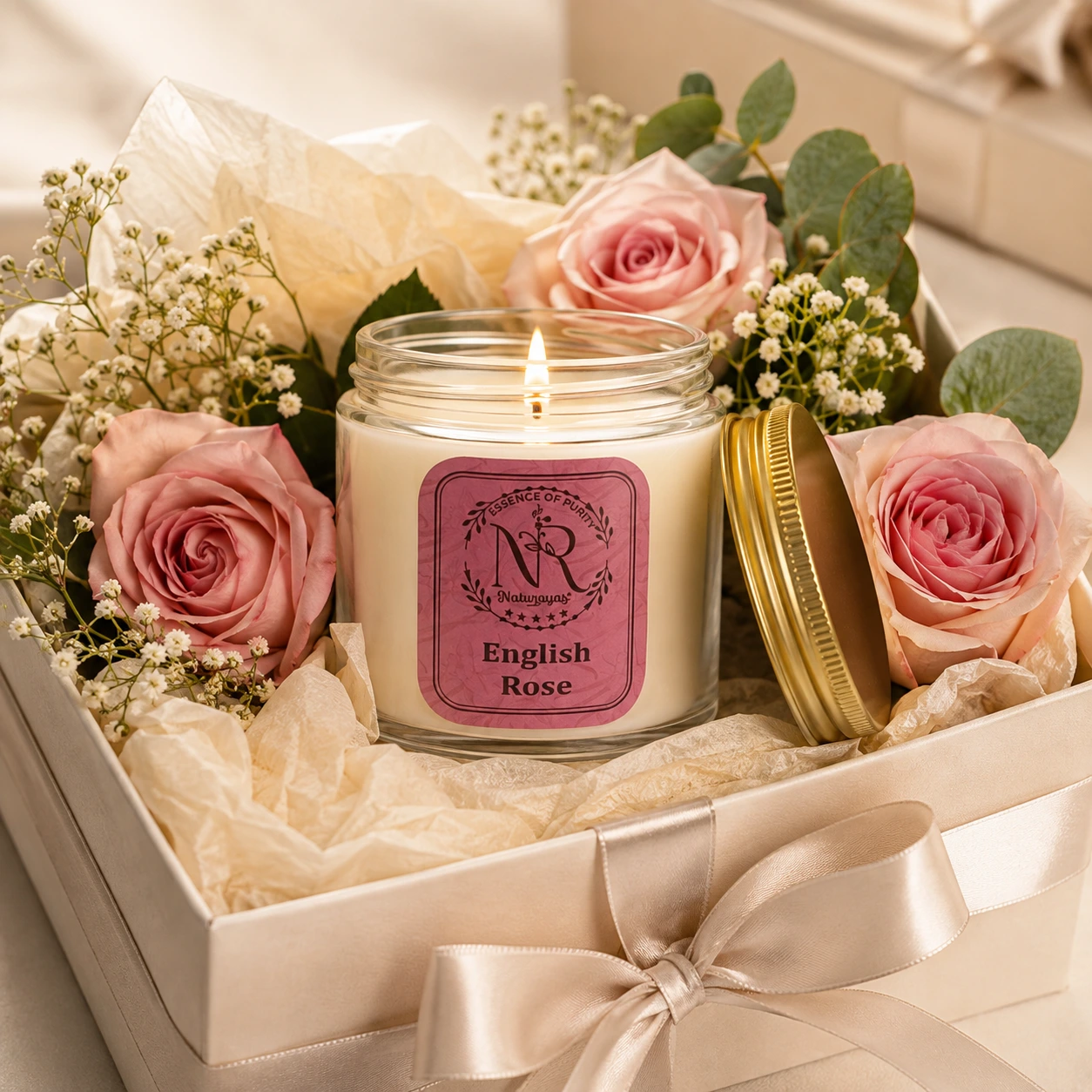
The Science of Candle Memory
Wax has thermal memory. The pattern established during a candle's very first burn dictates how it will melt for the rest of its lifespan. If you extinguish the flame before the liquid wax reaches the outer edges of the container, every subsequent burn will stall at that exact same perimeter.
       FIRST BURN MELT POOL PATTERN
┌──────────────────────────────────────────────┐
│  INCORRECT: Extinguished too early           │
│  [ Melt Pool ] ---> Tunneling Memory Set     │
│                                              │
│  CORRECT: Melted edge-to-edge                │
│  [======= Full Liquid Melt Pool =======]     │
└──────────────────────────────────────────────┘
The Fix
The First Burn Rule: On the first light, allow your candle to burn for one hour per inch of vessel diameter (typically 2 to 4 hours). Do not extinguish the flame until the liquid wax pool touches all sides of the vessel.
The Foil Repair Technique: If tunneling has already started, wrap a piece of aluminum foil around the top rim of the jar like a dome, leaving an opening in the center above the flame. This traps heat, melting the elevated ring of hard wax back into a smooth, level pool.
How Naturayas Prevents Tunneling
Cheap paraffin wax has a high, uneven melting point that makes tunneling almost guaranteed if you don't burn it for hours. Naturayas Scented Candles are formulated with a proprietary blend of natural soy and coconut waxes. These plant-based waxes feature a significantly lower, highly uniform melting point. The heat from the flame distributes evenly across the surface, ensuring a smooth, edge-to-edge melt pool even during shorter ambient burns.
2. Proper Wick Trimming: Stopping Soot, Smoke, and Mushrooming
If your candle produces a dancing, erratic flame, emits black smoke, or develops a carbon "mushroom" top on the wick tip, your wick is too long.
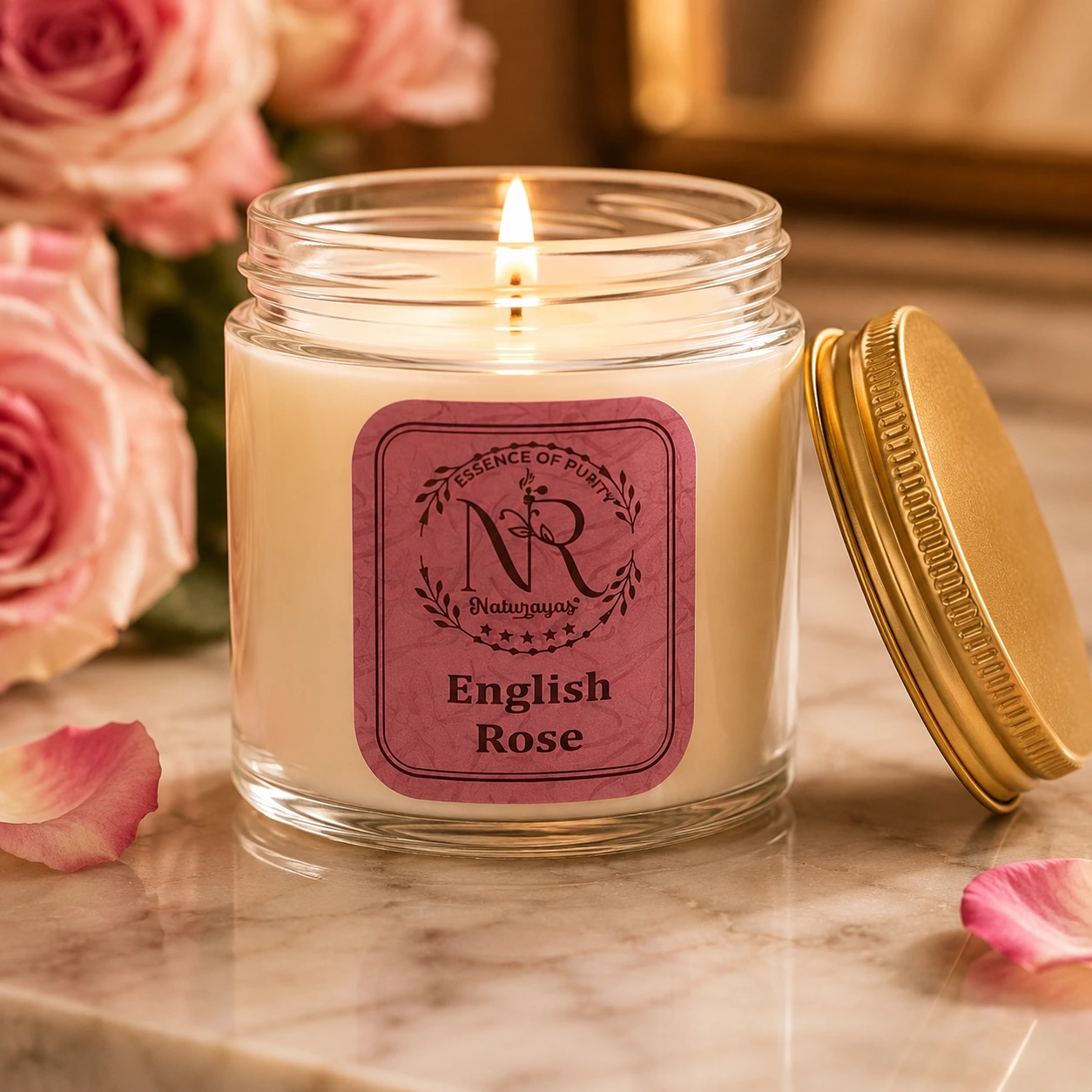
Why Wick Length Matters
A wick acts as a straw, pulling liquid wax upward into the flame to burn as fuel. When a wick is too long, it draws up more wax than the flame can efficiently consume. Unburnt carbon particles escape into the air as soot, depositing dark residue along your glass and polluting your indoor environment.
The Fix
Trim Before Every Light: Use a specialized wick trimmer or sharp pair of scissors to trim the wick to 1/4 inch (6 mm) before lighting.
Never Trim a Hot Wick: Always wait until the candle and wax pool have completely cooled. Trimming a warm wick can cause debris to drop directly into the soft wax.
Remove Mushroom Tops: Pinch or trim off any carbon buildup at the tip before re-lighting to prevent sudden sparking or excessive flame height.
The Naturayas Engineering Advantage
Naturayas pairs its natural wax blends with lead-free, 100% organic cotton wicks custom-sized to match each vessel's specific diameter. This precise wick-to-wax calibration prevents the flame from burning too hot or too cold, maintaining an ideal 1/4-inch flame height without soot buildup.
3. Unlocking Maximum Scent Throw
Scent throw is categorized into two stages:
Cold Throw: How strong the candle smells when unlit at room temperature.
Hot Throw: How effectively the fragrance disperses throughout a room when lit.
If your candle smells wonderful in the box but disappears when lit, the issue usually stems from fragrance overload or low-grade synthetic oils bound to cheap paraffin base materials.
                  THE SCENT THROW MATRIX
                                   │
         ┌─────────────────────────┴─────────────────────────┐
         ▼                                                   ▼
  [ Cold Throw ]                                      [ Hot Throw ]
  • Fragrance trapped at surface                      • Driven by melt pool depth
  • Indicates concentration                           • Requires clean, even evaporation
Factors Influencing Scent Throw
Melt Pool Depth: Fragrance oil evaporates directly from the liquid wax pool, not from the open flame. A shallow melt pool yields a weak hot throw, whereas a melt pool measuring 1/4 to 1/2 inch deep maximizes scent release.
Drafts and Air Movement: Placing a candle directly under an air vent, ceiling fan, or open window disperses the fragrance before it can establish a room-filling aroma profile.
Overheating Fragrance: Burning a candle for longer than 4 hours degrades the fragile top notes of high-end essential oils, leaving behind a dull, burnt aroma.
Troubleshooting Scent Performance
| Symptom | Cause | Solution |
| Weak Hot Throw | Melt pool is too small; drafts | Fix tunneling; relocate candle away from vents |
| Faint Aroma | Vessel is under-sized for room volume | Move candle to a smaller space or burn twin candles |
| Burnt / Chemical Smell | Flame is too hot; burned past 4 hours | Trim wick to 1/4"; extinguish after 3–4 hours |
Premium Botanical Fragrance Binding in Naturayas Candles
Petroleum-derived paraffin wax struggles to retain high concentrations of pure botanical oils without breaking down. Naturayas uses a slow-curing process that embeds premium, phthalate-free essential oils directly into the molecular structure of natural soy wax. As the candle warms, the low melting point creates a broad, deep melt pool that gradually diffuses multi-layered fragrance notes evenly throughout your home.
Quick Reference: The Essential Candle Care Checklist
1.Trim the Wick to 1/4 Inch:Before Every Single Burn.
Remove carbon mushroom tips and excess length to ensure a stable, soot-free flame and prevent overheating.
2.Commit to the Initial Melt Pool:First Burn Rule.
Allow the liquid wax to reach all edges of the vessel before extinguishing to set a clean thermal memory.
3.Burn in 2 to 4 Hour Windows:Protect Scent and Wax.
Extinguish after 4 hours to preserve essential oils and prevent the wick from drifting off-center.
4.Snuff, Don't Blow Out:Smoke Control.
Use a candle snuffer or wick dipper to extinguish the flame without generating harsh smoke or burning soot.
Coming Up Next: The Psychology of Scent Mapping for Better Sleep
Did you know that your olfactory system is the only sense directly connected to the limbic system—the brain's emotional and memory center? By strategic alignment of specific botanical scent notes with your circadian rhythm, you can condition your nervous system to drop into deep, restorative sleep in under fifteen minutes.
In our next article, we explore The Psychology of Scent Mapping for Better Sleep, breaking down how olfactory cues physically alter brainwave patterns before bed.
Bookmark this page and check back next week to transform your evening wind-down routine!